
Unlock Your Business Potential with AI Optimization
AI Visibility for Local Business
Show Me If AI Can Find My Business - Please Fill This Form
Understanding AI Visibility
Definition: AI Visibility
Key Insight
Key Takeaways
-
AI visibility is different from traditional SEO; direct AI recommendations are the goal.
-
Structured data (schema markup) is critical for AI to interpret your business information.
-
Conversational, FAQ-style content boosts discoverability in AI and voice search.
-
Citation signals from authoritative local sources enhance AI trust.
-
Voice search optimization requires concise, question-based answers.

How AI Assistants Choose Businesses
Relevance
Proximity
Authority
Engagement
Understanding the Process
How AI Assistants Evaluate Businesses
Structured Data Interpretation
AI reads schema markup to extract business details like hours, services, and contact information.
Semantic Relevance
Businesses are evaluated based on how well content answers specific conversational queries.
Local Citations & Mention
AI cross-references your business across directories, media, and social platforms to validate credibility.
Reviews & Ratings
Positive and recent reviews influence AI’s recommendation likelihood.
Freshness & Data Updates
AI systems prioritize businesses that regularly update their information, such as hours, services, posts, and offers.
User Interaction Signals
AI evaluates how users interact with your listings, including clicks, calls, direction requests, and time spent on pages.
Building Success with Small Wins
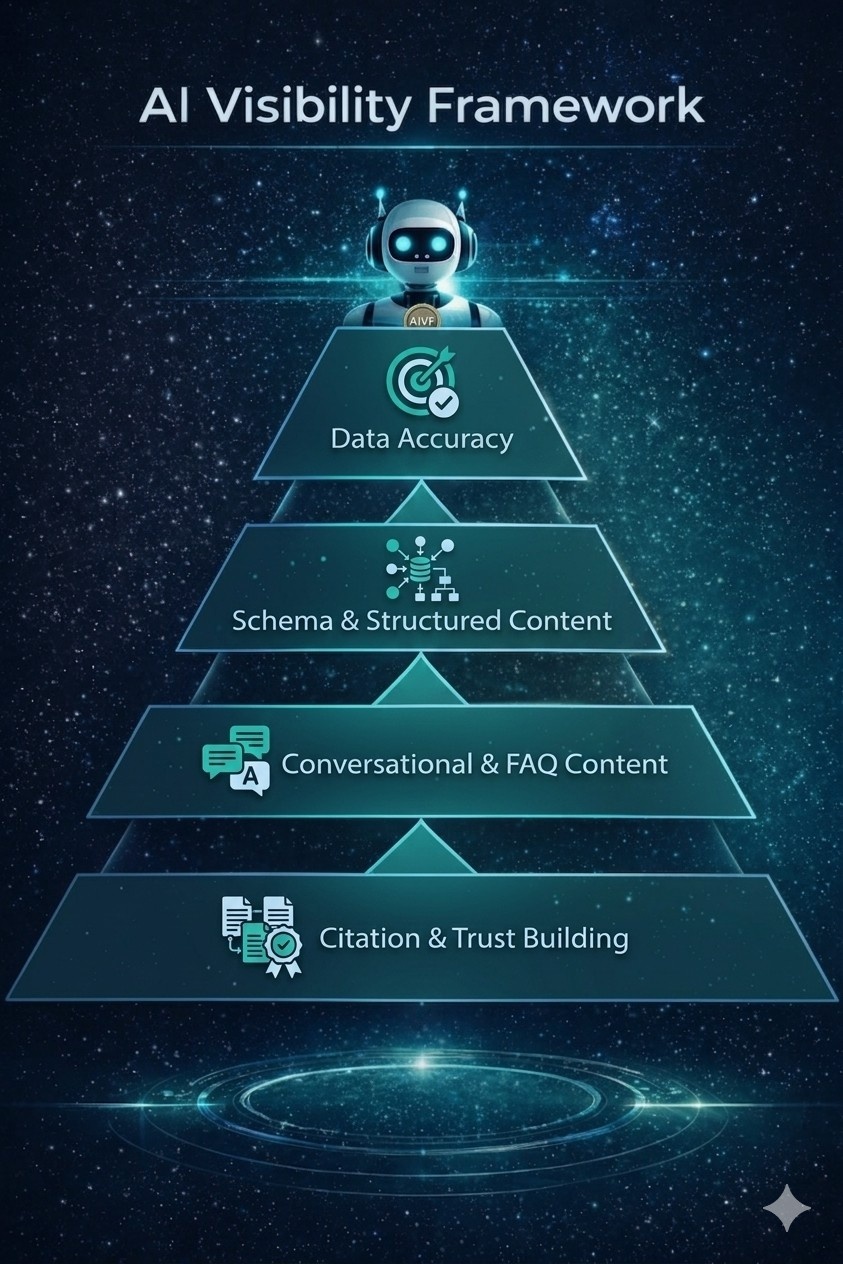
The AI Visibility Framework
Schema & Structured Content – Implement LocalBusiness, Service, Product, and Review schema for AI readability.
Conversational & FAQ Content – Create content targeting long-tail, natural-language queries relevant to your services.
Citation & Trust Building – Gain authoritative backlinks, local media mentions, and maintain active engagement with customer reviews.
AI Visibility Score
Answer the questions below to estimate how visible your business is to AI systems like ChatGPT, Google AI Overviews, Gemini, and Perplexity.
Disclaimer: This tool is for educational purposes and provides an estimate, not a formal AI visibility audit.
Answer the questions on the left to generate your AI visibility score, status, and recommended next steps.
Recommended Next Steps
-
- Start by completing the quiz to reveal your AI visibility score and priority actions.
Real-World Example Scenario
Consider a small coffee shop in San Diego:
-
The shop implements LocalBusiness schema with accurate hours and menu.
-
FAQ content is created for queries like “Where can I find oat milk lattes near Gaslamp Quarter?”
-
Google Business Profile and Yelp listings are fully optimized.
-
Local food bloggers link to the shop online.
As a result, ChatGPT and voice assistants now cite this coffee shop in recommendations, and Google AI features it in local “best coffee” summaries, increasing both foot traffic and online orders.
Becoming One of the Recommended Businesses
Step 1: Optimize Listings
Ensure Google Business Profile, Yelp, and social media pages are complete and accurate.
Step 2: Build Authoritative Citations
Secure mentions on local news websites, blogs, and niche directories.
Step 3: Publish Conversational Content
Develop FAQs, how-to guides, and blog content targeting AI-style queries.
Step 4: Engage & Collect Reviews
Respond to reviews, encourage feedback, and maintain consistent customer engagement.
Citation Signals That AI Trusts
Directory Consistency
Uniform NAP data across Google Business Profile, Yelp, TripAdvisor, and other local directories.
Local Media Mentions
Articles, news coverage, and blog features increase AI trustworthiness.
Backlinks from Authority Sites
Links from reputable local or niche websites signal credibility.
Reviews & Ratings
Positive and recent customer reviews act as engagement and trust indicators.
Social Proof & Activit
Consistent social media activity, post engagement, and user interactions reinforce AI recommendations.
Boost Your AI Visibility Today
FAQ
What is AI visibility for local businesses?
Do I need structured data to appear in AI search?
Can ChatGPT recommend my business?
How does voice search affect local businesses?
Are online reviews important for AI discovery?
Should I target long-tail keywords?
How often should I update my business info online?
Can small local businesses compete with larger brands?
How to Use Schema for AI
Business Schema
-
Mark up name, address, phone (NAP)
-
Add operating hours and services
Product & Services Schema
-
Describe products or offerings
-
Include pricing and categories
Review & Ratings Schema
-
Mark up customer reviews
-
Include star ratings and reviewer info